Bee Removal in Charlotte, North Carolina
SouthEast Bee Removal provides specialized bee removal services in Charlotte, NC. Our work is focused exclusively on bees, using ethical and safe methods that prioritize the preservation of colonies. We serve residential, commercial, and rural properties in the region with care and efficiency.

Since 2013
100+ Google reviews
Live Bee Relocation
10-year Guarantee
Meet Our Bee Keeper:
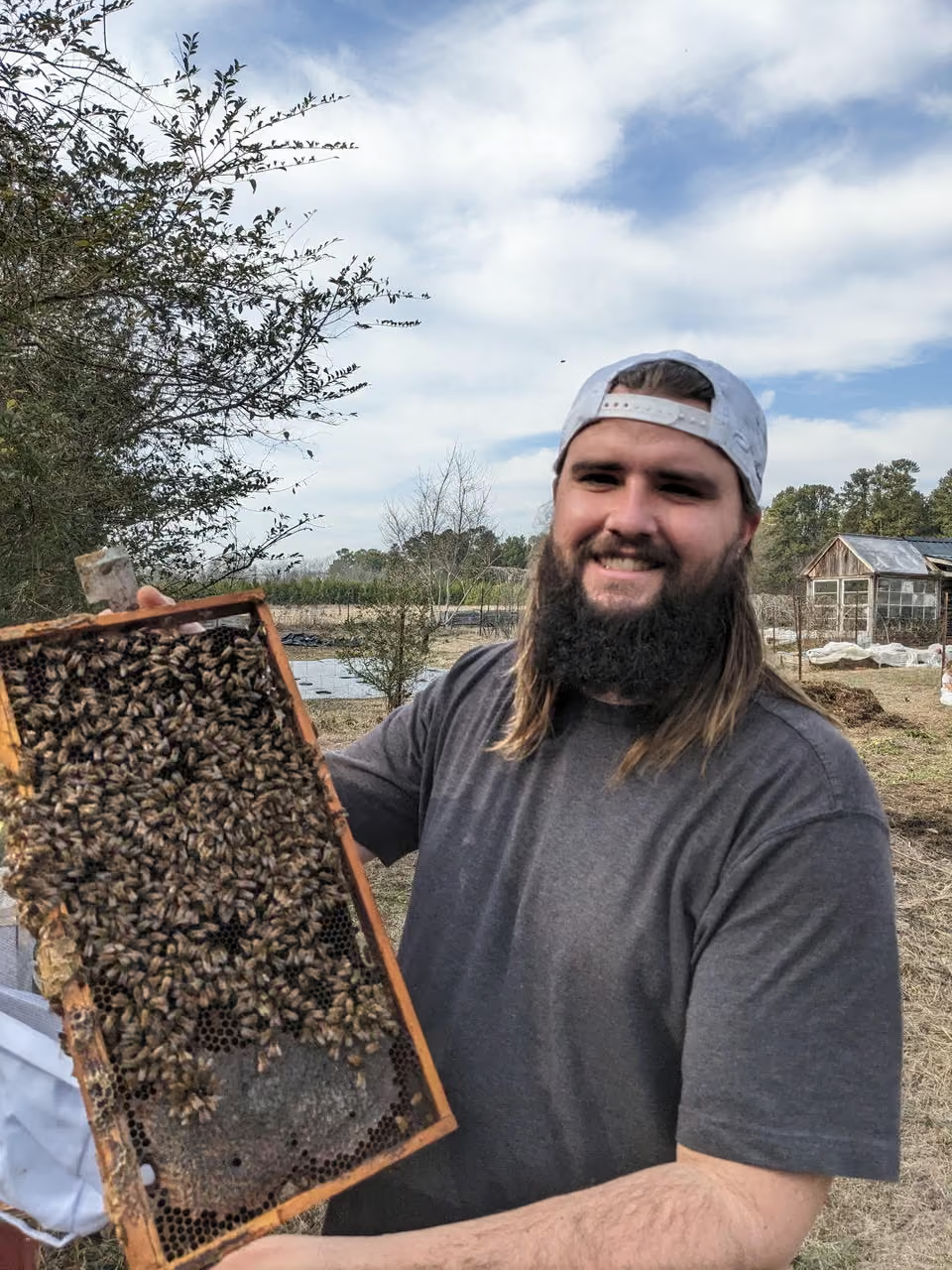
John Haley
SouthEast Bee Removal's operations in North Carolina and South Carolina are led by John Haley, a beekeeper since 2019.
John's connection to the land runs deep. His family has been raising livestock and farming for over 100 years. Today, John carries that tradition forward as a cattle and goat rancher, pecan farmer, and gardener. Beekeeping is the newest chapter in his family's agricultural history.
His wife and their three young daughters—ages 6, 4, and 2—have all become beekeepers too. His dad and brothers also help with the honey harvest and the business. What started as one person's interest has grown into a family-wide commitment to bees, the land, and working with purpose.
John also has a background in construction, which helps him identify entry points with precision, assess potential structural damage, and properly seal areas after a removal. It is one of the many details that sets his work apart.
How We Solve Your Bee Problem
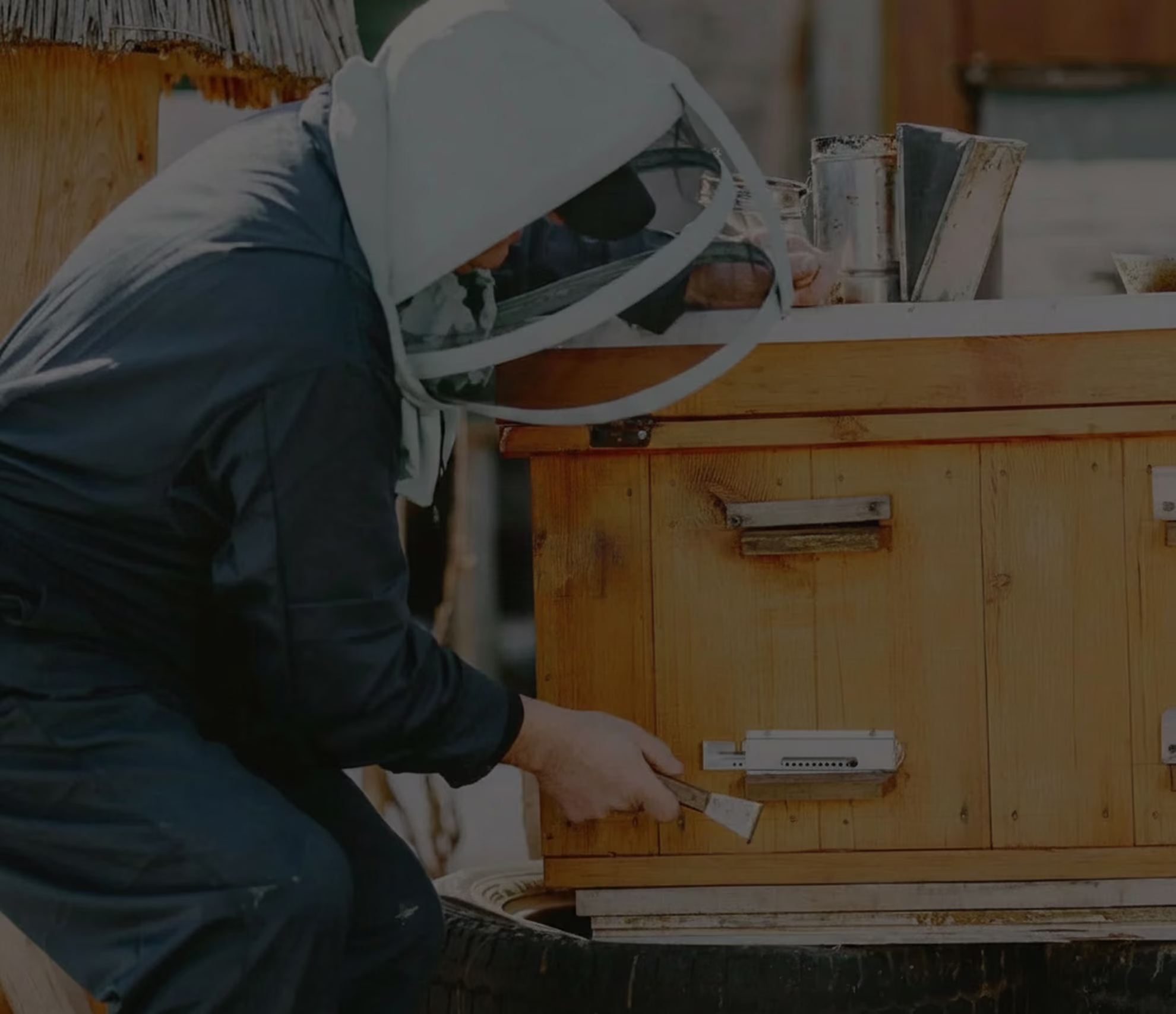
Inspection
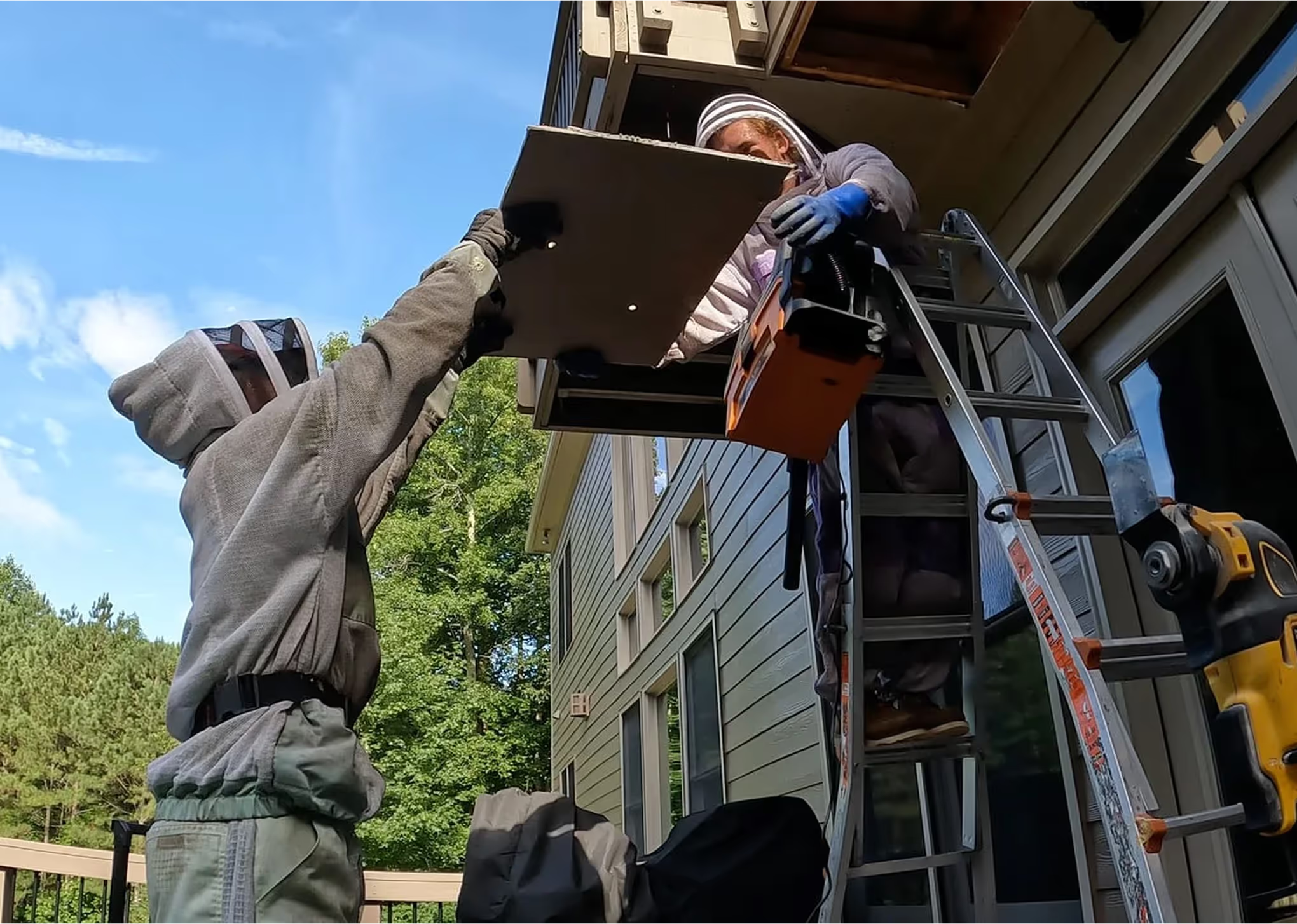
We conduct a thorough inspection of your property. When needed, we use thermal imaging tools to locate hives hidden inside walls, ceilings, or roofs. The inspection is free and comes with no obligation.
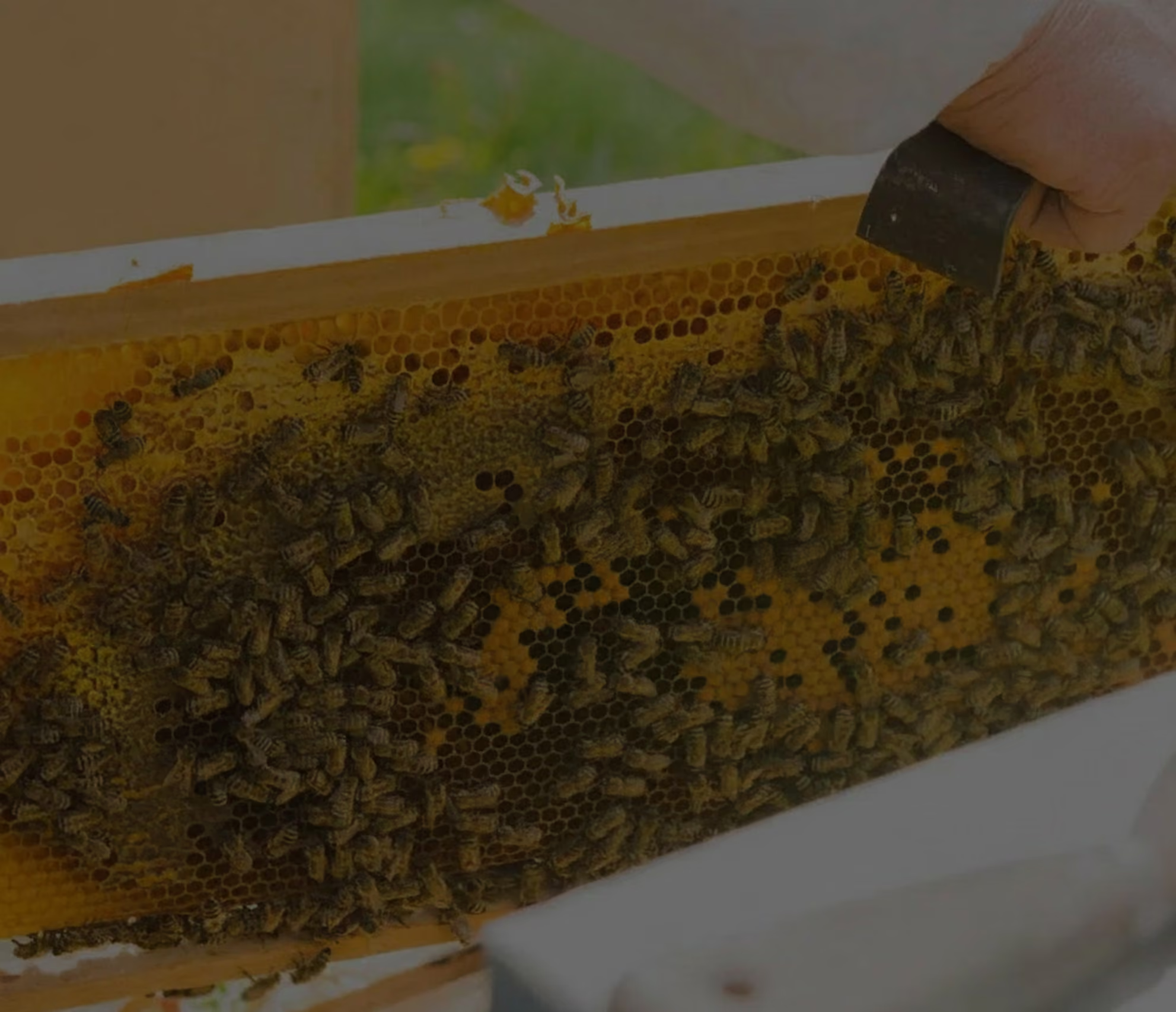
Removal
Our experts safely remove the bees and the comb using humane, ethical methods. The bees are kept alive throughout the entire process.
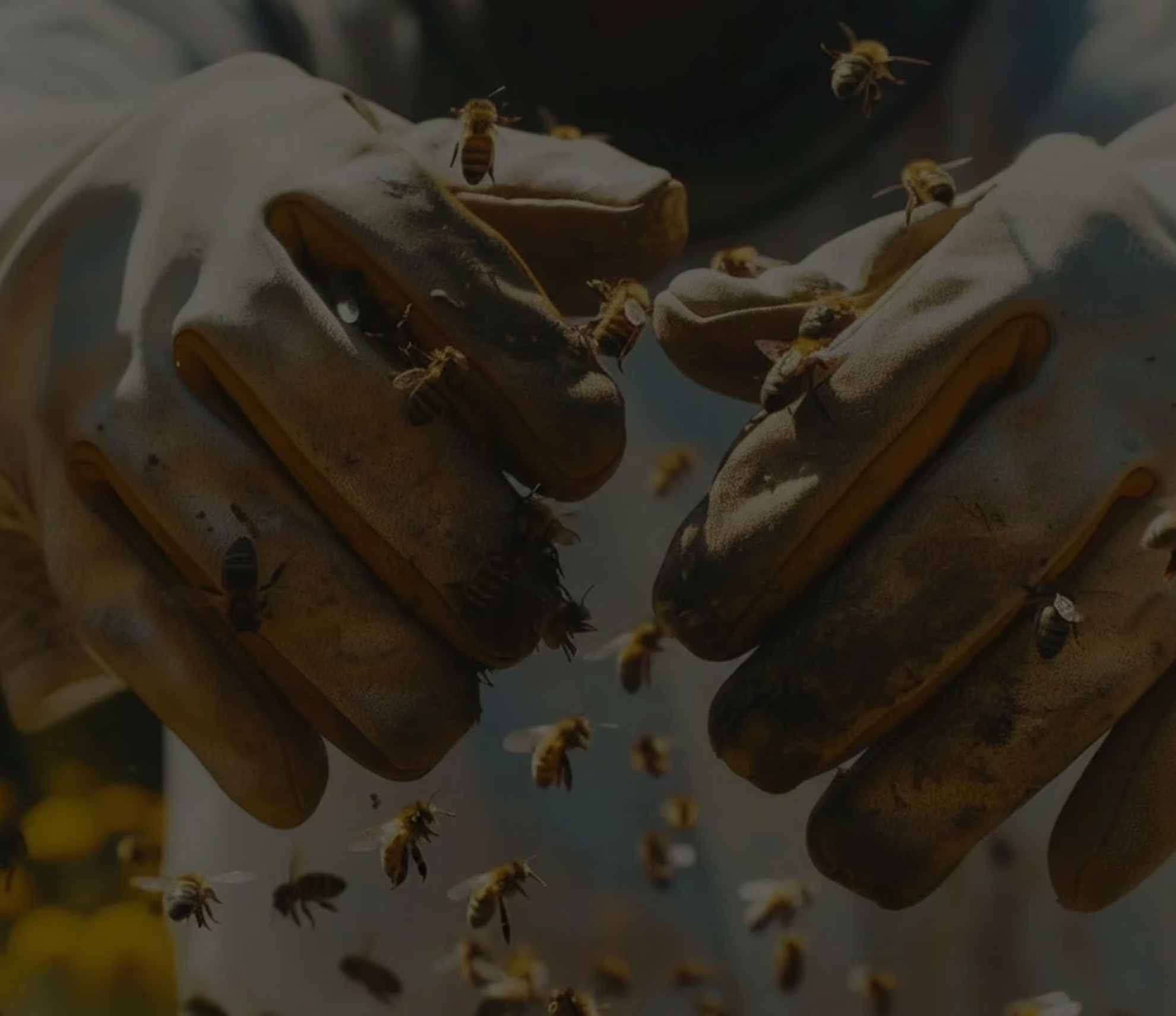
Relocation
All removed bees are relocated to local apiaries or safe environments where they can continue to thrive and pollinate. We do not exterminate bees.
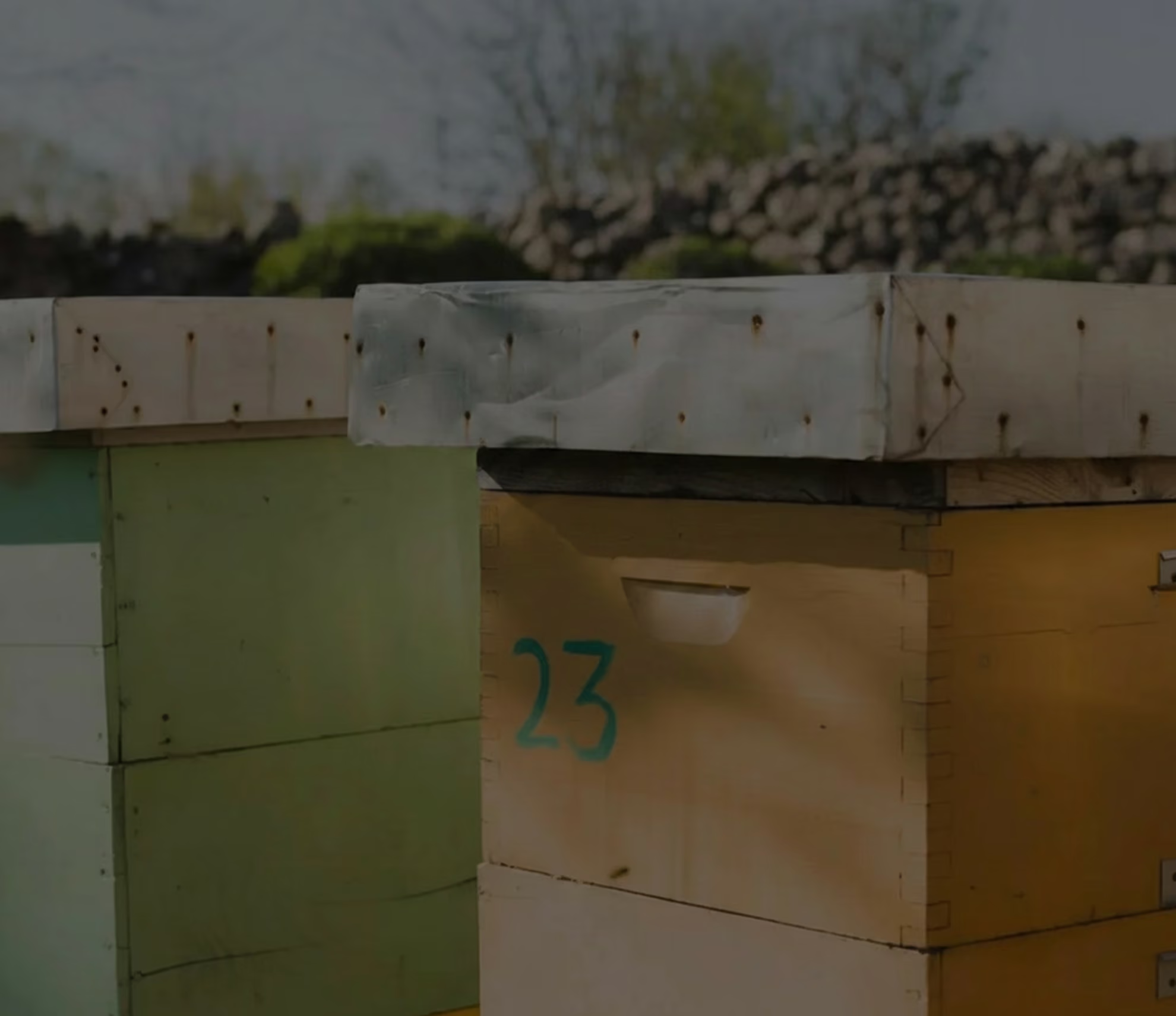
Repair
After the removal, we repair any damage caused by the hive and provide prevention tips. Whenever possible, we seal entry points to help prevent future swarms from moving in.
How We Solve Your Bee Problem
We work exclusively with bees. Our services include:

Post-removal repair and sealing
Free Estimates
Swarm capture in urban and rural areas
Live bee removal from walls, roofs, trees, and chimneys
Swarm relocation to partner apiaries
Thermal imaging inspections for hidden colonies
Why Choose SouthEast Bee Removal?
- John Haley is an active beekeeper, not just a removal technician
- We work exclusively with bees—this is our specialty
- 100% ethical, humane removal with guaranteed relocation
- Thermal imaging tools for precise, non-invasive diagnostics
- Post-removal repair and sealing by a professional with construction experience
- Free estimates and fast response
- Family-owned and operated by people who work with bees every day
Frequently Asked Questions
In 1950 in the United States there were approximately 5.5 million colonies of honey bees. In 2017, there were around 2.5 million. Loss of habitat, change in agricultural practices, and other factors have contributed to this decline. In 2006, what is known as CCD (colony collapse disorder) came on the scene.
CCD was so named because of the unexplained dying off of honey bee colonies, even though they had plenty of stores of honey and pollen. Because of CCD, winter losses among beekeepers have been higher than normal. Some possible causes were thought to be the following: varroa mites, diseases, pesticides, GMOs (genetically modified organisms), and commercial and unnatural beekeeping practices. As of April, 2024, there were 2.71 million according to a study by Cornell.
It can be challenging keeping bees in the 21st century. Beekeepers managing colonies in the US must cope with a myriad of issues. It takes knowledge, skill, and perseverance to overcome these challenges and be a successful beekeeper.
No, it is not illegal to kill honey bees. However, it can be considered bad practice to kill honey bees without at least making an effort to save them. If people or property are in danger that is one thing and the situation should be handled accordingly. Most of the time however, the bees can be removed live without damaging the property or hurting anyone. Killing honey bees is often just a quick fix that doesn’t solve the problem and costs more in the long run.
Getting stung is an unavoidable part of the job for beekeepers and bee removal experts. Even with professional protective gear, it’s difficult to avoid stings when working closely with thousands of bees each day.
At Southeast Bee Removal, our owner has been stung hundreds of times each bee season—a normal part of safely handling live bee colonies. While protective suits reduce the risk, occasional bee stings are simply part of the work we do to remove bees safely and humanely.
First off, don’t panic and do your best to not disturb the bees. Sudden movements and loud noises near their nest, is sure to stir them up. The best thing to do would be to call a professional bee removal company asap.
Thankfully, for the most part, Africanized bees have not spread into areas that we service: middle and north Georgia, middle eastern Alabama, and South Carolina. There have been a few reports but they have not been widespread. Most of the honey bee colonies we remove are typically your average honey bee colony. Every once in a while however, we do come across a honey bee nest that is so mean that it is hard to do the work. For these jobs, one must stay completely covered up in protective gear until leaving the job site.
A more defensive honey bee colony doesn’t necessarily mean it is Africanized. The temperament of the colony is determined by the queen’s genetics. Some breeds are more defensive than others such as Russian bees. This problem is something that can be remedied. After removing and relocating a bee hive, the temperament of the colony can be changed by simply replacing the queen with a queen of more gentle stock.
States that have seen the most incidents of Africanized honey bees include Florida, Texas, Arizona, New Mexico, and California. Although these bees can be a concern, the media has hyped them up and made a bigger deal about them than they really are. Our advice is to be cautious around any kind of bees nest. If you are being stung by bees or yellow jackets, the best response is to run away from them until they stop chasing you. If you can, get inside as quickly as possible. Change your clothes, because bees can crawl underneath them. Do not to jump into a body of water, the bees may be waiting for you when you come up for air.
Yes! We really enjoy working with pest control companies that do not specialize in the live removal of honey bees. We love helping pest control companies provide a solution for their customer’s bee problem. If you are a pest control company looking for a beekeeper or bee removal specialist to work with, please contact us and we would be happy to talk and explain our services. Also for homeowners that use a pest control service, you are more than welcome to let them know that we deal with honey bees. We truly appreciate referrals and recommendations from current customers!
At Southeast Bee Removal, we specialize in safe and humane honey bee removal across Georgia and the Southeast. We also professionally remove yellow jacket nests and hornet nests, and occasionally bumble bee nests, using eco-friendly techniques that protect pollinators whenever possible.
We do not remove:
- Paper wasps, mud daubers, or cicada killers (these are solitary or small-colony insects — a general pest control company is the right call)
- Carpenter bees
- Mason bees
- Bees simply pollinating flowers or plants (these leave on their own once blooming ends)
Yellow jackets are different from paper wasps. They're colonial, aggressive, and capable of structural damage — a specialist job. If you're not sure whether you have yellow jackets or something else, send a 15-second video to our contact page and we can identify it for free.
For pest types we don't handle, we're happy to point you toward a licensed pest control company.
Southeast Bee Removal services Georgia, Alabama, and South Carolina. In Alabama, we cover Birmingham, Montgomery, and the eastern part of the state. In Georgia, we cover most of the state including middle to north Georgia, Atlanta, Rome, Athens, Augusta, Macon, and Columbus.
In South Carolina, we cover the upper part of the state including Greenville and the surrounding areas. Please note, we are able to travel further distances but a travel fee may apply. If you have a bee removal problem in an area not mentioned above, contact us and we can let you know if we are able to provide bee removal service to your area.
We have completed hundreds of honey bee removals and have over fifteen years construction experience. When you hire us, know that you are hiring a pro bee removal service!
Yes. When Southeast Bee Removal does the repairs to the access area, we guarantee that honey bees will not return to the the exact location they were removed from. If we do not do the repairs, we will not guarantee against re-infestation of new bee colonies. However, we will be happy to inform you how repairs should be done to prevent bees from ever coming back to that spot again.
In the unlikely event that the problem is not taken care of the first time, Southeast Bee Removal will continue coming back until the problem is fixed or we will refund part or all of your money. Note that after a job is complete and the entry point sealed, it is normal to have forager bees coming back. They will not be able to get through the sealed entry point. These forager bees can hang around for up to a week or two before they are completely gone.
Southeast Bee Removal reserves the right to withhold this guarantee for certain situations but will inform the customer before beginning and it will also be stated on the invoice/receipt.
Yes, Southeast Bee Removal carries $1,000,000 in general liability as well as having workers comp.
The bee removal process from start to finish typically will take about 4 hours, sometimes less or more time depending on the difficulty and size of the bee removal job.
Though we hope you choose Southeast Bee Removal, we know that there are other bee removal services/companies out there. Some do excellent work. Others you will be sorry you ever hired. So how do you decide which company to go with? Here are some questions that may be helpful to ask.
Will the bees be killed, or removed live and relocated? Since honey bees are so vital to our environment, most reputable pest control companies will not kill them unless there is an immediate danger to people or no other option. We would recommend rescuing the bees as your first choice.
Is the entire bees nest removed or will honey, comb and bees be left inside the structure? The real problem starts when the bees are killed and the hive is not removed. First of all, killing 15,000-60,000 bees is the equivalent size of a cat or other small animal. As the dead bees decompose, it can smell quite horrid. As for any honey left in the walls or floor, pests can chew through it causing the honey to ferment and drip. This will create a huge mess and most likely damage drywall and other building materials. Repairs from the damage can be costly.
Will repairs be included? Some companies only remove the honey bee colony but do not do the repairs of the access area. It is nice to be able to hire someone who is able to do both the removal and repairs and have everything taken care of in one day.
Does the bee removal company carry liability insurance and workers comp? Make sure to ask if not stated on the website. Many hobby beekeepers and those offering “free” or lower cost bee removals, do not carry any type of insurance.
Is the work guaranteed? What if bees return to the same spot the next year or the year after? One thing to know about honey bees is their keen sense of smell. This enables them to return to an old location where a colony has been in the past no matter how well it has been cleaned out. If the area has not been sealed properly bees will often come back.
How much bee removal and construction experience does the person have doing the work? Just like with any profession those who offer unusually low prices often do not have much experience and do cheap work. Experienced companies have completed many bee removals, will do minimal damage to your home when accessing the bees, and will do the job right so you don’t have problems in the future.
Home insurance companies do not provide coverage for bee removal, as the damage is caused over period of time rather than sudden loss. It doesn’t hurt to check, but from what other home owners have told us, it does not.
If you are looking for live honey bee removal and relocation services you have come to the right place. We rescue and relocate honey bee colonies!
Unfortunately we cannot offer free bee removal. We have many expenses in the business such as: liability insurance, workers comp, gas, vehicle upkeep, specialized bee removal tools and equipment, many miscellaneous expenses, thousands of hours of study and training to be experts at what we do, and advertising costs so you can find us.
After removal, the newly relocated hive of bees needs to be housed and fed to stay alive through the coming winter. On top of this, we guarantee to solve your bee problem, provide excellent customer service, work high up in dangerous places, and put up with literally hundreds of bee stings per season.
Get a quote for a bee removal – don’t worry, we don’t sting!
Location & Service Area
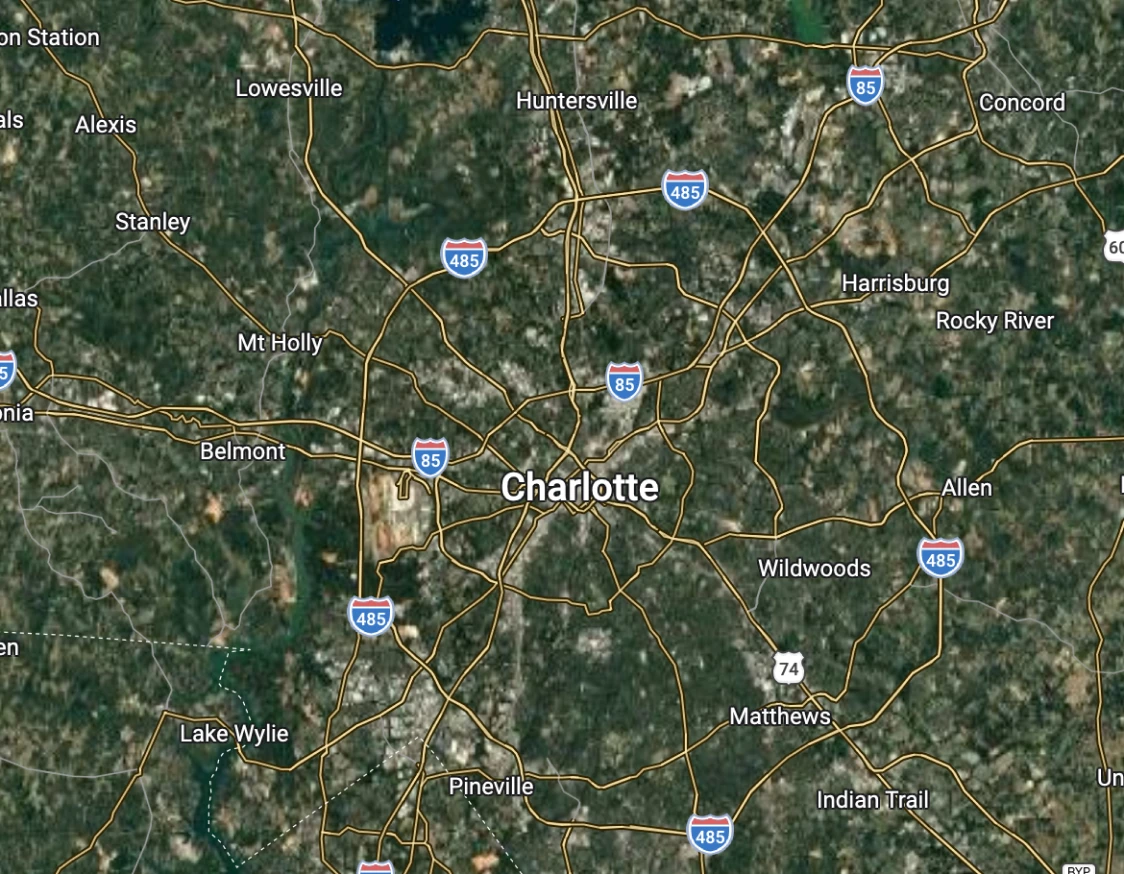
We are based in the region and provide in-person service to Charlotte and surrounding areas.
If you are located in or near Charlotte and need help with bees, please contact us. We welcome calls from any Charlotte-area resident.
For specific neighborhood or city inquiries, please reach out and ask. We will confirm whether we can serve your location.