



Our Blog Articles About Bees
Yellow Jacket Season Is Here
Yellow Jacket Season Is Here
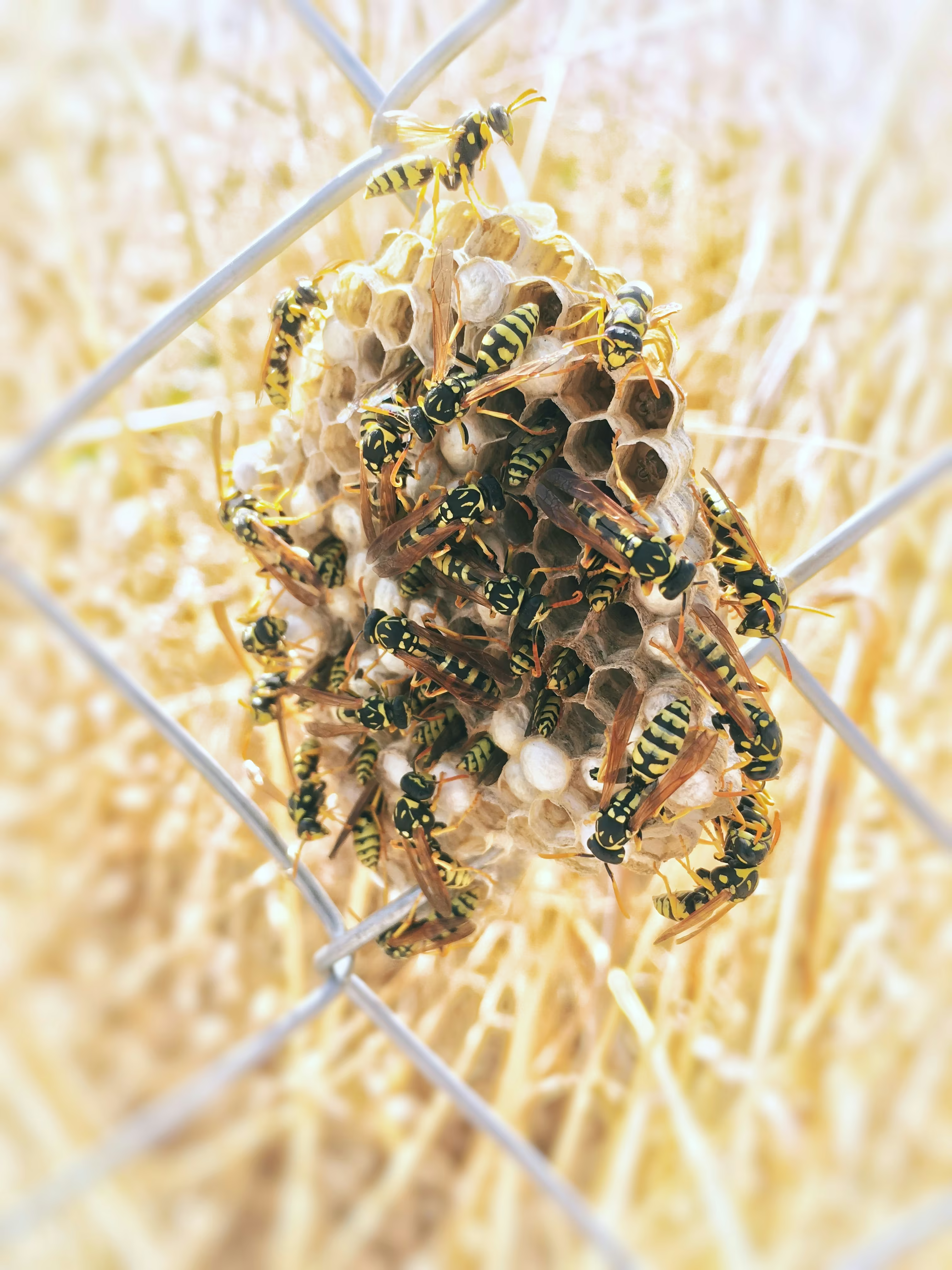
Every summer, Atlanta homeowners start noticing aggressive, stinging insects buzzing around their yards, decks, and poolside furniture. Most assume it's bees. Most are wrong.
"By the time people call us, the nest has usually been there for months," says Ewout van Oosten of Southeast Bee Removal. "The queen was already there in April. You just didn't see it yet."
Southeast Bee Removal says yellow jacket calls begin picking up in mid-June and run strong through September — sometimes into October depending on nest size and weather. If you're past the identification stage and want to know what actually works for removal, the Georgia removal guide covers that in full — including how large nests can get when Georgia winters are mild, why wall nests are a different problem entirely, and what WD-40 won't do.
The Nest Was There Before You Noticed It
Yellow jackets start building nests as early as April and May. Honey bees run on a calendar of their own — here's bee season in Georgia and when to expect them. But in those early months, the colony is small and the workers are busy feeding larvae — which reward them with a sweet secretion. The insects are calm. The nest is invisible.
That changes fast.
Once the larvae mature and stop producing that food reward, yellow jackets shift their attention outward — aggressively pursuing anything sweet. By then, the nest has had months to grow.
"The bigger the nest, the harder it is to remove," van Oosten says. "If someone calls us in June when they first see activity, that's a much easier job than the person who waits until August."
The takeaway: if you're seeing yellow jackets around your home right now, act early. The nest is already established.
Ground Holes and Chewed Drywall: What to Look For
One of the most common misidentifications homeowners make is assuming any black-and-yellow insect is a honeybee. Yellow jackets and honeybees look similar from a distance, but there are clear differences. This identification guide covers exactly how to tell them apart — along with carpenter bees, bumble bees, and sweat bees.
How to tell them apart:
- Body shape. Yellow jackets have a noticeably thin, hourglass-shaped waist. Honeybees are more cylindrical and uniform.
- Nesting location. Honeybees need large enclosed spaces — wall voids, attic cavities, hollow trees. Yellow jackets often nest in the ground or inside smaller cavities like wall gaps, soffits, or crawl spaces. If insects are coming out of the ground, it is not honeybees. That's yellow jackets.
- Behavior. Yellow jackets become increasingly aggressive as the season progresses. Honeybees are generally non-aggressive unless a hive is directly disturbed.
There's also a structural damage risk that most homeowners don't know about. Unlike honeybees, yellow jackets chew through soft building materials. Van Oosten recently responded to a call where yellow jackets had eaten through drywall and were entering a home through a kitchen ceiling.
"Bees don't do that," he says. "Yellow jackets will chew right through it."
What Actually Works — and What Doesn't
Hornet spray is the right product. Standard hornet spray, available at Home Depot and most hardware stores, kills yellow jackets on contact. For a ground nest: wait until after dark when all foragers have returned, aim the nozzle at the entrance using the extended applicator tube so you can stand back, and apply directly into the hole. Do it once. Do it right.
WD-40 doesn't solve the problem. It appears constantly in online recommendations and will kill individual insects on contact — but it will not penetrate the nest, will not reach the queen, and will not eliminate the colony. The queen is the only variable that matters. If she survives any treatment attempt, the colony rebuilds. Every time.
Wall nests are a different problem entirely. Spraying a yellow jacket nest inside a wall without a clear exit route drives the insects deeper into the structure — or through it into your living space. Wall nests need the nest located and treated at the source, then the entry sealed after. This is not a DIY situation for most homeowners.
DIY Removal: One Shot, Or Don't Try
Some homeowners attempt to handle yellow jacket nests themselves. Van Oosten doesn't discourage it outright — but he's direct about the stakes.
"You can do it yourself," he says, "but you have to do it right the first time. If you don't, they will come after you."
For homeowners who aren't certain what they're dealing with, Southeast Bee Removal offers a free identification service: send a 15-second video and their team can typically identify the insect and advise next steps within the same day — without any obligation to book a service call.
Why October Gets Worse Before It Gets Better
Many Atlanta residents notice yellow jackets seem most aggressive in the fall. There's a reason for that.
In October, the yellow jacket season is winding down — but the insects are at their most desperate. The larvae that had been feeding them are gone. Worker yellow jackets have no food source coming in, so they seek out anything sweet with increasing aggression.
The good news: by mid-October, most colonies have died off for the season. Yellow jackets do not reuse old nests, so a nest removed this season will not return to the same location next year.
Yellow Jackets Do Have a Purpose
Before reaching for the spray, it's worth knowing: yellow jackets are useful insects. They're scavengers that eat dead insects and organic debris — functioning as a cleanup crew in the ecosystem.
"They're like the vultures of the insect world," van Oosten says. "They actually clean stuff up."
The issue is when a colony establishes near a high-traffic area of a home or yard. Unlike honeybees, yellow jackets are not limited to a single sting and can sting multiple times. Homeowners with children, pets, or anyone with a known sting allergy should prioritize professional assessment over DIY.
Southeast Bee Removal Handles Yellow Jackets Across Metro Atlanta and Georgia
Southeast Bee Removal provides professional yellow jacket identification, nest removal, and entry point sealing across Metro Atlanta, Marietta, Alpharetta, Roswell, Athens, and throughout Georgia.
Not sure if it's yellow jackets or honeybees? Send a 15-second video to our contact page or call 404-594-2337. We can usually identify the insect and advise on next steps the same day — at no charge.
Don’t Wait—Act Fast on Bee Infestations
If you’ve seen signs of bee activity around your home, don’t delay. Bee infestations grow quickly and can cause costly damage if left unchecked.
Whether you need:
- Bee hive removal in Atlanta
- Carpenter bee removal
- Or a trusted bee exterminator in Georgia
…our team is ready to help with fast, safe, and eco-friendly solutions.
Specialized Bee Removal
We specialize in removing hives from difficult locations including walls, roofs, chimneys, and soffits.
Get a Free Quote
Honeybee Removal and Relocation
Safe extraction of swarms and established colonies. We remove the bees alive and transport them to a safe environment.
Yellow Jacket & Hornet Removal
Rapid response for aggressive stinging insects. We remove nests completely to ensure safety for you and your family.
